
Raubtier Kollektiv: A German hip-hop voice lets out a roar with "Zoo Deutschland."

The charm of the album lies in the fact that each track is drawn from the artist's own experience rather than mere conceptualization.
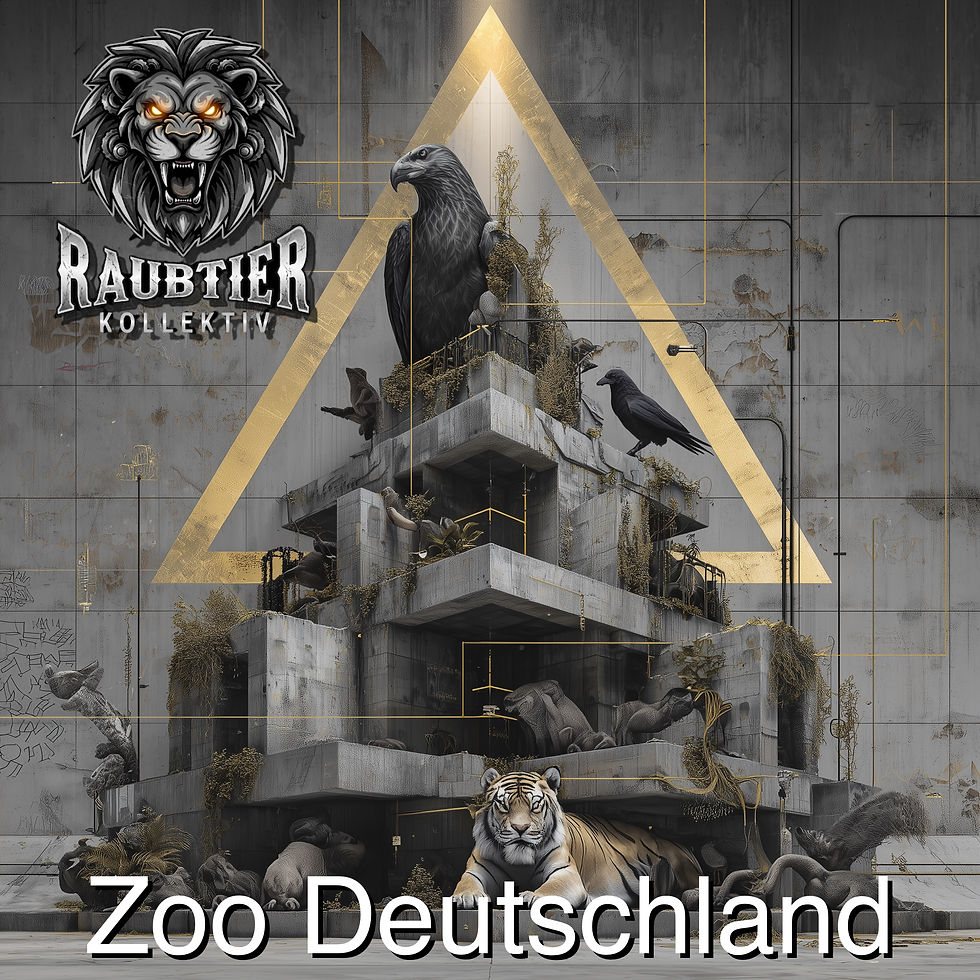
German hip-hop has always managed to survive on its unapologetic realism in telling street stories, and a fresh artist has entered the limelight with a premise that redefines the language of survival itself. Berlin-raised rapper Raubtier Kollektiv presents his nine-song album, "Zoo Deutschland," which explores the brutality of city living and transforms it into a symbolic animal kingdom. With a total running time of 19 minutes and 4 seconds, the nine-track record depicts a figurative zoo in which each animal represents a facet of the streets: nature, loyalty, treachery, power, and survival.
"What makes Raubtier Kollektiv compelling is not only his versatility, but also his ability to shift between hushed, predatory tones and alpha roars."
What distinguishes "Zoo Deutschland" is that it refuses to bank on the tired tropes of commercial rap. With a decade of living experience, Raubtier has borrowed sharp observation and storytelling to create a world in which street players are not merely hustlers or gangsters—they're lions, elephants, crocodiles, and zookeepers.

From the very beginning, when the album launches with "Der Elefant" (The Elephant), listeners find themselves immersed in a universe where power is determined not by brashness but by strength with a booming bass; here, the elephant becomes wisdom and unity, anchoring the record in strength.
The song serves as a declaration of purpose, declaring Raubtier Kollektiv not just as another rapper competing for room but as a strong force in the movement. After that is "Krokodil Tränen" (Crocodile Tears), where he fiercely attacks the emotions in rap by declaiming "false cries dressed as truth."
The story continues to get denser and cinematic in "Adler Perspektive" (Eagle Perspective), with orchestral arrangements, and here he reflects the irony of success, a musing on greed and the isolation that comes from being better than the pack, with the strings giving it a near-movie-like effect.
Each track feeds the next and redirects to the other, and the concept never loosens its grip. Next comes "Zoo Wärter" (Zookeeper), an incredible beat structure with a challenging power structure by saying, "Who actually runs the streets?" that questions, "Who controls the cages?" This track is compelling people to think about the systematized oppression and cages of society. The track is both aggressive and lyrical, with the production echoing the animal energy that's at the center of the endeavor. Beats pound like gorilla fists against a chest in "Gorilla Geschäfte" (Gorilla Business), echoing hustles of street economies.
Next up is "Nachts im Zoo" (At Night in the Zoo); this track drips atmosphere, bringing audio to the world of shadows. Meanwhile, the orchestral lift gives the album a grandeur that elevates the track with a heavy record.
“Every metaphor comes from real experience,” he explains. “Every animal represents someone I’ve known or been.”
Culturally, "Zoo Deutschland" arrives at a pivotal time. German hip-hop is now caught between authenticity and commodification, and social media is defining much of the discussion. By addressing performative emotion in "Krokodil Tränen" and systemic control in "Zoo Wärter", Raubtier Kollektiv is framing itself as a truth-teller, keeping with hip-hop's origins as a voice for the voiceless. His existence adds power to the album's effect: it's raw with honesty, wrapped in symbolism.

"Zoo Deutschland" is not music—it's survival poetry. Through the use of language that is both unimaginable and animalistic, it reworks the hustle, the betrayal, and the scars of urban life. Bringing us into this metaphorical zoo, he not only shares his story but also makes us think about our place in society. Are we predators, prey, or the zookeepers yanking the strings?
With this debut, Raubtier Kollektiv has produced a work that is not only culturally relevant but also musically groundbreaking. It's a singular combination of rhymes implying supremacy through knowledge.


Comments